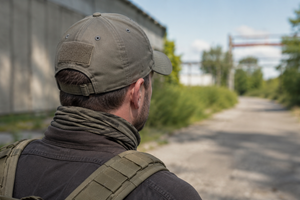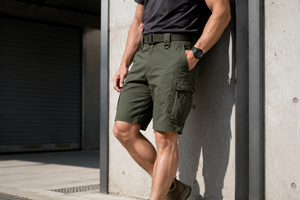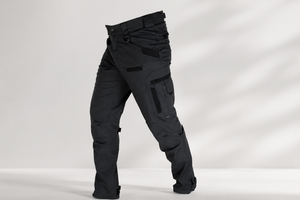

Purchasing military clothing isn't just about "khaki color" and "lots of pockets." It's about a well-thought-out body protection system adapted to the task, season, type of activity, and potential threat. An incorrectly chosen set will result not just in discomfort but in serious risks such as hypothermia, overheating, fabric wear and tear at the most inopportune moment, and so on. Therefore, if you're choosing military clothing for active use, not just for a photoshoot, the approach should not be aesthetic but purely functional and practical.
Military Tactical Clothing: Key Selection
Criteria It is critically important to consider three factors: size, manufacturing materials, and functional features. Let's start in order.
Tactical clothing does not forgive errors in size. Too tight clothing will restrict movement, overstrain joints, and not allow the full potential designed by the manufacturer to be realized. Military clothing that is too loose will be caught by the wind, snag on equipment, disrupt the fit of body armor or plate carriers, and, like tight clothing, create discomfort during sudden movements, reducing the fighter's maneuverability. Especially important:
- for base layers and thermal underwear – an anatomical fit without wrinkles, protruding threads, and bulky seams;
- for jackets and trousers – the ability to move with a full range of motion;
- for winter sets – it is essential to consider the concept of a multi-layered clothing system (ECWCS or PCU) so that the layers do not "interfere" with each other, creating discomfort.
Regarding manufacturing materials, in military and tactical clothing, there is no such thing as "just fabric." Each material is chosen deliberately and serves a specific purpose. Here are a few simple examples: Rip-Stop – increased strength, tear resistance, and lightness. Nylon Cordura – reinforced fabric to strengthen the most wear-prone areas. Softshell – absolute wind protection and water repellency without overheating the body. Gore-Tex and similar membranes – complete waterproofness and breathability during prolonged rain/snow. Thermolite, G-Loft, Climashield Apex, and other modern insulation materials with minimal weight, excellent thermal insulation, and performance characteristics designed for extreme conditions.
When buying tactical clothing from a good manufacturer, you don't need to delve into which fabrics were used in the sewing process. Everything has been thought out for you down to the smallest detail. The same principle applies to functionality. Yes, of course, it won't hurt to pay attention to the location of pockets and compartments, how they are implemented, what material the D-rings are made of, whether the hood is removable or hides in the collar, etc. But this is more about personal preference than about how extensive the functionality of specific high-quality military clothing is. YKK zippers, Velcro fasteners, Duraflex hardware, and the presence of adjustments at the waist, wrists, and leg cuffs are already classic standards of reliability and functionality in tactical clothing.
What is the Difference Between Field and Everyday Military Clothing?
We won't be talking about dress uniforms – only practical, functional clothing used in positions, training grounds, and civilian conditions.
Choosing Military Uniforms for Field Conditions
- Colors – Multicam®, MC, MM14, Ranger Green, Coyote, and other military shades.
- Cut – designed not only for comfortable wear and maneuverability but also adapted for armor, load-bearing equipment, and other tactical gear. The main thing is to get the size right.
- Materials – durable, wear-resistant with reinforced areas and water- and dirt-repellent impregnation.
- Functional features – integration for knee pads and elbow pads, well-thought-out pockets and compartments, and everything that might be useful in extreme field conditions.
This is clothing designed to "survive" in dirt, dust, rain, and snow, withstand heavy tearing loads, and remain a fully operational, functional element of the equipment set.
Everyday Military Clothing
- Color – solid military colors (olive, navy, grey, tan, black, etc.).
- Cut – loose but adapted for active movement.
- Materials – lighter and more comfortable to the touch.
- Functional features – the absence of unnecessary elements that are simply not needed in such operating conditions.
- Suitable for security personnel, instructors, volunteers, staff workers, etc.
However, if you look at modern examples of military clothing, the difference between combat and everyday wear is almost completely blurred. Nowadays, tactical clothing is made universally by default and performs equally well on the training ground, in the city, and in everyday wear.