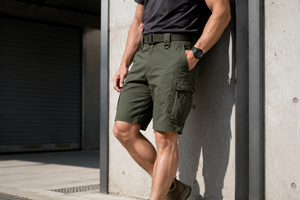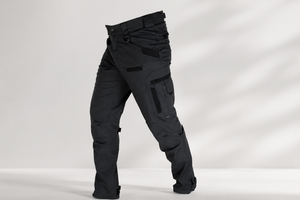

A classic warm winter jacket and outdoor gear are items with fundamentally different characteristics, even if they look very similar. Likewise, a solid military color or a camouflage pattern with many pockets does not necessarily mean you are looking at military or tactical pants. Ordinary civilian models for everyday wear can have absolutely any color, appearance, or functionality and may even somewhat resemble tactical versions. However, the difference becomes visible and significantly noticeable in real operational conditions.
Operational Features of Tactical Pants
Tactical trousers are not just clothes for training or highly specialized airsoft uniforms. At their core, they are functional pants with increased wear resistance, designed for regular active use in conditions where ordinary everyday clothes wear out quickly. They are chosen for hunting, fishing, tourism, field training, outdoor work, and any scenario where freedom of movement, practicality, and high resistance to external adverse factors are vital.
However, modern tactical pants have long moved beyond the military-style appearance. Many tactical-format trousers look neutral and fit easily into an urban style while maintaining all the advantages of tactical clothing. Thanks to this external modernization, these products are in demand among people who prioritize durability, convenience, and functionality over decorative components.
Advantages of Tactical Pants
What makes tactical trousers special? A combination of design solutions:
- Cut oriented toward free movement. This type of clothing is designed taking into account active work with the torso and legs. For this, anatomical solutions are used – sufficient volume in the hips, articulated knees, and sometimes elastic inserts or stretch materials.
- Materials with increased resource. The tactical segment uses fabrics that withstand abrasion, snags, and multiple wash cycles much better than regular pants.
- Reinforced zones and wear protection. Most high-quality models have additional reinforcement in critical areas, which in turn reduces the risk of wearing through and extends the product's service life during daily intensive use.
- Functional pockets and well-thought-out gear placement logic. Tactical pants differ not just in the number of pockets, but in their practicality: placement for quick access on the move, the ability to carry small gear, documents, an EDC kit, etc.
And, of course, versatility in everyday wear. Due to the thoughtful cut, comfortable fit, and the ability to choose neutral colors, some models are suitable not only for field tasks but also for daily urban use. Tactical functionality is fully preserved without an excessively military appearance.
Key Differences Between Tactical and Regular Pants
Primary differences include manufacturing materials and functionality. It is worth starting specifically with the fabrics used in tailoring.
Materials Used in Tactical Pants
For example, a common solution for tactical trousers is rip-stop on a cotton base with added polyester and spandex. This solution creates three practical effects at once:
- the fabric withstands high tear and abrasion loads;
- maintains tactile comfort;
- has moderate elasticity, which directly affects freedom of movement.
Additionally, a water- and dirt-repellent coating may be applied. It creates a hydrophobic layer that reduces surface wettability. Firstly, the coating protects the pants from soaking through quickly, and secondly, dirt is less likely to "soak into" the material and is generally easier to remove during washing or even simple wet cleaning.
Regarding more advanced tactical versions, namely military ones, they are even more focused on regular high loads and work in harsh conditions. In addition to classic solutions like rip-stop, more technological material compositions and various combinations are used. Let's look at the most widely used ones:
- NYCO (a blend of cotton and nylon). A fabric created with a priority on wear resistance. Nylon increases resistance to abrasion and tears, while cotton maintains acceptable breathability and comfort during long-term wear. This is why NYCO is often found in uniform and field clothing: the fabric is designed for an intensive operating mode where items constantly rub against gear or contact various (including abrasive) surfaces.
- FLEX (cotton/polyester/elastane). An option for those who critically need mobility and the most comfortable fit. Due to elastane, the fabric works better during active movements, polyester increases strength and durability, and speeds up drying. Cotton, as usual, is responsible for comfort against the skin. The result is an excellent balance between lightness, strength, and convenience.
- Cordura. Deserves a special place, although this material is not the main fabric of the pants. Cordura is used as reinforcement in zones most prone to wear: knees, leg bottoms, pocket areas, and other places of constant friction.
The combination of such materials and solutions allows for military and, in some cases, tactical trousers that simultaneously withstand high mechanical loads and are perfectly protected from external factors. Despite all this, they remain comfortable during long-term wear. It is important to understand that when choosing tactical or military pants, it makes no sense to simply focus on the strongest or most elastic fabrics. Everything depends directly on the individual conditions in which the pants will be used most of the time. Thanks to a variety of material solutions, you can always choose this type of clothing for a specific wearing scenario. Moreover, tactical and military pants can even combine several fabrics with their own characteristics, each working reliably in the required zone.
Military and Tactical Winter Pants – A Fundamentally Different Level of Thermal Comfort
In insulated models, the differences from ordinary winter pants are even more noticeable because not only strength is important, but also thermal insulation, ventilation properties, and performance in wet conditions without losing key characteristics. The base of high-quality winter tactical trousers is usually built on the principle of layering:
- outer layer – material with protection against moisture and precipitation (often these are membrane solutions or fabrics with a water-protective treatment). It reduces soaking in rain and wet snow and decreases wind chill;
- middle layer – a wear-resistant base (e.g., nylon or polyamide) that adds strength and protects the product from mechanical damage;
- inner layer – insulation. The tactical segment uses exclusively high-tech synthetic insulations (e.g., G-Loft). They are lightweight, retain heat even in high humidity, are not inferior in thermal insulation characteristics to natural down, are resistant to repeated compression, and do not clump after long-term use.
And, of course, special attention is paid to details. The presence of long ventilation zippers (from the hip to the bottom of the leg) provides the opportunity to shed excess heat quickly. This is extremely practical: if you enter a warm room, get into a vehicle, or activity increases – unzip the zipper and avoid overheating without taking the pants off completely. Naturally, there is a high waistband that protects the lower back area from wind and hypothermia, especially when bending, squatting, or working in the snow.
Functional Differences Between Tactical and Regular Pants
The functionality of such trousers is not just "for show." We are talking about a well-thought-out placement system and the presence of all necessary reinforcements, which together provide maximum ease of use and significantly increase the product's resource. There is no point in considering all existing solutions, as there are many, and tactical pants are frequently modernized with new ideas. Let's talk about the basic, time-tested functional features.
Pockets and Access to Contents
Side pockets are made with dual access, which increases the convenience of working with them dynamically: you can quickly get the necessary small items regardless of body position. Additionally, cargo pockets with asymmetric flaps are provided. They simplify opening with one hand, especially when you are on the move or wearing gloves, and reduce the risk of accidental unfastening and subsequent loss of contents. In high-quality tactical trousers, pockets do not interfere with sitting, do not create excess volume, and allow you to organize small things with quick access without using a backpack or pouch. But that's not all:
- Separate sections for EDC and tools. Dedicated compartments with the aforementioned Cordura reinforcement are provided for a knife or multitool. This is a critical detail, as sharp edges and clips quickly destroy ordinary fabric in civilian versions, while reinforcement significantly extends the material's resource in this zone. Separate pockets for a phone or notepad are implemented so that gadgets and documents stay in their place, not in main pockets with keys and other small items.
- Rear pockets and carrying security. Rear pockets are made in a closable format – this significantly increases the security of the contents and reduces the likelihood of losing items during active movements. In some models, rear pockets may be additionally reinforced (especially in zones where abrasion most often occurs when sitting).
Gear Suspension and Securing
The presence of D-rings allows for attaching accessories on carabiners and lanyards. This is very convenient when quick access to a specific item is needed and the pockets are already loaded, or it is important not to lose the item during work or intense movement.
Adjustment of the waist area or the bottom of the pant legs goes without saying, as any high-quality tactical pants can be adjusted quite accurately to the figure for a comfortable fit. What is worth mentioning is the presence of built-in kneepads made of EVA foam or slots for them. EVA provides cushioning when working on the knee and reduces the load on the joints, which is especially important in field conditions, when shooting from a knee, during training, or long work on the ground. This solution is not implemented in all models because it is not 100% necessary. So when choosing, be sure to pay attention to the presence or absence of such functionality.
To sum up: the difference between tactical and regular pants is that the former do not restrict movement, withstand significant tear loads, provide quick access to gear, and do not lose their characteristics in different weather conditions. Give preference exclusively to professional tactical clothing from trusted manufacturers like M-GEAR®. Only then will you be able to experience all its benefits fully.