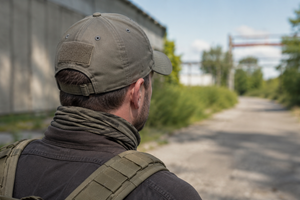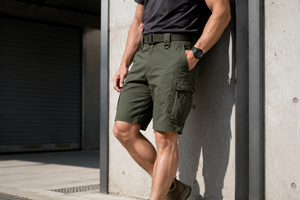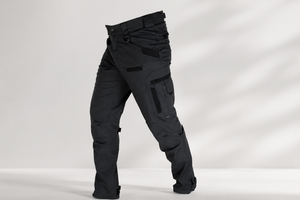

Demi-season tactical clothing is the most complex in terms of its structure and operational characteristics. Its purpose is to provide thermal comfort and protection from adverse weather conditions not only during the autumn-spring period, but also in winter, and in some cases even in hot climates. Currently, one of the best solutions for the off-season is Softshell tactical clothing. What are its features and advantages compared to other types of materials? We'll tell you all about it in detail now.
What is Softshell fabric?
Softshell is not a specific type of material, but a technological solution where clothing is created with multi-layered functionality in mind. Softshell pants or jackets in their basic version have two key characteristics:
- 100% wind protection. The clothing literally blocks air currents (even intense, gusty winds), which is especially relevant in open terrain or at high speeds of movement.
- Water-repellent properties. Precipitation rolls off the surface of the fabric without being absorbed. Without a membrane layer, this level of moisture protection is sufficient to stay dry under a brief downpour or light snowfall.
Thanks to Softshell, tactical clothing has a small volume and weight, which in turn allows for a maximum level of ergonomics. In addition to the factors listed above, you can buy Softshell jackets and pants with insulation, with a membrane, or simply as a wind/water-repellent layer. Let's delve into this point in more detail.
Softshell Tactical Clothing: Types and Characteristics
Despite the general name, clothing using Softshell technology can vary greatly in design and functionality. All products are conditionally divided into three main types, each designed for specific operating conditions and levels of physical activity.
Uninsulated Softshell Clothing
It uses a single thin, yet technological fabric layer. Its main task is to protect against wind and light precipitation, while providing maximum mobility and ventilation. However, it's worth noting that such models do not have warming properties. They lack internal insulation, so they are not intended for use in cold weather without additional layers of clothing.
For civilian use, uninsulated Softshell often turns out to be impractical. However, in tourism, active recreation, law enforcement, and paramilitary structures, such solutions are in high demand. Why? Because during high-intensity physical exertion, sudden changes in weather conditions, built-in insulation and overheating become a real problem. Here, the ability to regulate thermal comfort through a layered clothing system is necessary, for example:
- during active movement, sweat-wicking thermal underwear (Level 1) is worn, and Softshell tactical clothing on top;
- when the temperature drops, an insulating layer of thermal underwear (Level 2) is simply added.
Uninsulated Softshell simply serves as a base for protection against wind and precipitation and allows for layering clothing for specific tasks.
Insulated Softshell
These are two-layer models where an internal insulating material, most often fleece, is added to the outer shell. Such clothing retains heat better and is suitable for wearing in cool weather conditions without the need for additional Level 2 thermal underwear.
Insulated Softshell jackets and pants can be safely used in urban environments (where the climate is more predictable) and during moderate physical activity (foot patrols, trips to objects, territory guarding, and simply everyday wear). Insulated Softshell is popular among units that operate in stable climates and do not require strict thermoregulation through a multi-layered clothing system.
Softshell with Membrane
Such Softshell tactical clothing can include either two layers (outer – windproof and water-repellent, intermediate – membrane, with high waterproof ratings) or three. The third layer is insulating. The presence of a membrane provides an additional level of protection: in heavy rain or wet snow, such clothing stays dry much longer than its “non-membrane” counterparts. This makes models with a membrane optimal for unpredictable weather conditions, especially during the off-season. In addition, membrane Softshell is often used as an outer layer in winter military and tactical pants and jackets.
In addition to the three modifications mentioned above, Softshell tactical clothing can combine the properties of several types of this technology at once. A striking example is a Softshell jacket with a removable insulating liner. Such a model has all the advantages of both insulated and uninsulated variations – a full-fledged demi-season jacket and a lightweight shell for active physical loads.
Softshell is not synonymous with “fleece jacket, pants,” but rather the result of the evolution of functional clothing created to adapt to absolutely any weather conditions.