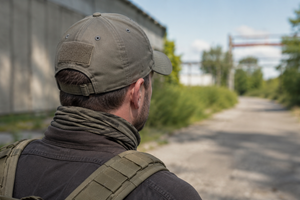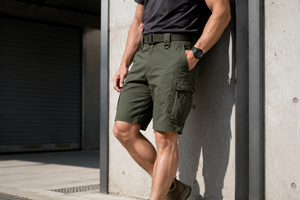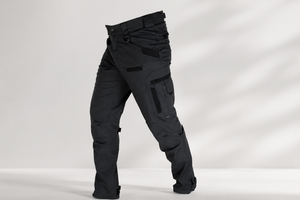

Military and tactical windbreakers are a practical outer layer of clothing chosen not based on the "do I like the color or not" principle, as is often the case with civilian models. Performance parameters are primary here because such clothing must operate reliably in various weather and operational conditions.
Choosing a Tactical Windbreaker: What to Look For
Style, coloring, and additional elements that add interesting accents to the appearance are certainly important, but the following five criteria should come first:
- Environmental Protection. The properties of the fabric and its treatment are crucial: how good are the windproof properties, how does the product handle precipitation and dampness, how quickly does it dry, and will this windbreaker be comfortable during sudden temperature changes?
- Freedom of Movement. The cut should allow active work with arms and torso – without restriction when bending, squatting, carrying a backpack, and in combination with gear.
- Number and Placement of Pockets and Compartments. Not just "as many as possible," but so that access to the contents is convenient while moving or wearing gloves, and the contents do not interfere with the windbreaker's fit or cause discomfort in different body positions.
- Compatibility with Layering Systems. Naturally, this point is relevant only when wearing the product in specific operational scenarios. The windbreaker should work correctly as an outer layer over thermal underwear and insulating layers, not conflict in volume or length with systems like ECWCS or PCU, not restrict movement, and not create extra folds under armor or a backpack.
- Durability. Resistance to abrasion and snags is vital, as is the quality of seams, hardware, and additional reinforced zones.
These specific parameters determine whether the windbreaker will be a truly functional element of clothing or turn out to be just an ordinary civilian jacket in practice.
How a Tactical Windbreaker Differs from a Regular (Civilian) One
No, it is not the solid military colors or pixel patterns that are the distinguishing feature. A tactical windbreaker often looks like a regular mid-season hooded jacket, and that is precisely what is misleading. The difference is not in appearance, but in how it is engineered and what it is made of. A civilian windbreaker is mostly designed for walks and moderate loads. A tactical one is for regular use in conditions where clothing constantly experiences friction, snags, moisture, dirt, temperature fluctuations, and active movement dynamics.
What Materials are Tactical Windbreakers Made Of
For this lightweight jacket to be truly durable, it is not enough to choose a model made of just any strong polyester. Fabric structure, fiber composition, thread type, and how the material behaves under stress (stretching, friction, contact with equipment, and frequent washing) are all important.
The tactical segment uses textiles designed for harsher operational environments:
- Softshell – an excellent balance of 100% windproof properties, moisture protection, and comfort in motion;
- 4-Way Stretch – so the jacket does not limit the range of motion;
- Nylon-based Blends – to increase tear strength, abrasion resistance, and maintain a comfortable fit.
Models with microfleece inside deserve a separate mention: this is not an insulated jacket in the classic sense, but a windbreaker with increased comfort. it performs excellently in cool weather while remaining lightweight and not turning into a heavy outer layer.
Protective Fabric Properties and Sewing Quality of a Tactical Windbreaker
For example, wind protection is provided not only by the density and construction of the material but also by well-executed additional design elements (collar, cuffs, drawstrings). Water-repellent treatment reduces moisture absorption and helps the windbreaker stay operational longer in wet snow, fog, light rain, and contact with wet vegetation. Increased resistance to snags and mechanical stress is also a critical parameter, often not found in civilian versions.
Even if a windbreaker is made of excellent fabrics, it does not mean it can withstand more than a gentle urban use mode. Sewing quality is a separate factor directly affecting the product's longevity. Tactical models have even seams made of durable threads without skips, and they lack "weak spots" regarding stitching. Such windbreakers do not start coming apart at the seams during or after active body movements.
Hardware also plays a significant role. Zippers and fasteners from YKK or manufacturers of similar quality undoubtedly increase reliability and ease of use.
Layering Concept: Compatibility of Tactical Windbreakers with Multi-Layer Systems
This is one of the key distinguishing features of a tactical windbreaker. It is designed with a multi-layer clothing system in mind, where each layer performs a specific function: from moisture wicking to insulation and environmental protection. Therefore, the windbreaker:
- has a cut that allows wearing it over thermal underwear and fleece without creating tightness;
- maintains maneuverability and comfort both with and without base layers;
- follows the logic of systems like ECWCS (e.g., as Layer IV) or PCU (as an adaptive outer layer for high activity).

How to Choose a Military Windbreaker
Attention to detail will help you buy a high-quality product. Most models feature a high collar that covers the neck and reduces wind chill in an area where the body loses heat fastest. The hood is adjustable for volume and fit, ensuring it doesn't cause discomfort in the wind or limit visibility. In some versions, the hood can be stowed in the collar, which is extremely convenient when not needed.
The bottom edge of the jacket is usually equipped with an elastic drawstring, allowing you to adjust the volume and block cold air from entering from below. Velcro adjustments are often used on the cuffs to achieve a tight fit around the wrist, which is especially important in strong winds, rain, or during active movements when sleeves constantly shift.
Ventilation deserves separate attention. An army windbreaker may be equipped with functional ventilation zippers in the armpit area. These allow for quick shedding of excess heat and moisture during high activity without unzipping the jacket from the front.
Additional Elements Defining Practicality and Comfort
Pockets and the organization of essential items are excellently implemented in both tactical and military models. Spacious pockets close with zippers and are equipped with extended pullers so they can be opened quickly and comfortably even with gloves on. The pockets themselves are positioned so that unobstructed access is maintained in various body positions and while wearing gear. Depending on the model, you might find pockets on the:
- Chest – to access contents even with a backpack belt or while using a chest rig.
- Sleeves – as a quick-access zone for small items.
- Sides – for basic everyday use.
An important point: tactical and military windbreakers focus more on external pockets rather than internal ones. The reason is simple – contents must always be within quick, convenient reach.
Velcro panels are another characteristic feature of military and tactical models. The ability to place rank insignias, identifiers, patches, and other marking elements is basic functionality for this outerwear. As for color options, tactical and army windbreakers are produced in classic solid military colors (olive, black, dark navy blue, tan) and camouflage variants (MM14, Multicam®, MC). Solid colors are often more practical for the city and mixed use scenarios, while camouflage is for field conditions and tasks where concealment is vital.
Even if such a windbreaker is purchased solely for regular everyday wear, its advantages do not disappear. The comfortable cut and fit, wind protection, basic precipitation protection, and practical pocket organization remain as relevant in the city as they are in the field.
Choosing the Size of a Tactical Windbreaker
First, you need to decide in advance exactly how the windbreaker will be worn:
- City/Moderate Activity. In such cases, the windbreaker is most often worn over a T-shirt or a thin long-sleeve. In this case, you need your specific size so the fit is comfortable without excess volume.
- Field Conditions, Hiking, High Activity. During such use, the windbreaker is almost always worn over thermal underwear and fleece. You need a size that provides extra volume but doesn't turn the garment into a "bag." Here, it would be a mistake to buy a windbreaker that fits too tightly.
- Wearing with Equipment (Chest rig, plate carrier, backpack). The windbreaker must allow movement of the shoulder girdle, not bunch up under straps, and not create excessive tension on the zipper and seams.
The rule of thumb is simple: the more layers and gear, the more important a proper volume reserve is. It is also crucial to consider the type of cut. Relying solely on a manufacturer's size chart is not the best idea. For a windbreaker, not only chest circumference and height matter. The fit is also heavily influenced by shoulder width, sleeve length, and waist/stomach circumference. Cut plays a massive role here. The optimal option when ordering a tactical or military windbreaker online is to consult with the store managers before purchasing a specific model.